Promo Direct – promotional items
info@promodirect-europe.com   
tel. +420 776 706 777   
Promo Direct logo mobil
   Cart is empty
  Customer: Login
   Cart is empty

ITEMS IN CART

  Customer: Login
Promo Direct – promotional items   |   e-mail: info@promodirect-europe.com   |   tel: +420 776 706 777

Printing on Promotional Products

Printing your logo on promotional products is the most effective way to place your brand, slogan or contact details directly into the hands of your customers and business partners. Whether you need printed pens, mugs, T-shirts, bags or keyrings, we will be happy to help you choose the right printing technology. Every material and every purpose calls for a different technique – for example, pad printing is not suitable for glass and ceramic mugs that are frequently washed in a dishwasher. Choosing the right technology ensures your print stays sharp and legible for the entire lifetime of the product.

To provide an accurate quote, please send us your logo together with your inquiry. Once the order is agreed, we will send you a graphic proof of the product with your logo – printing only starts after your written approval. The delivery time therefore also depends to some extent on your cooperation.

Top quality – our goal!

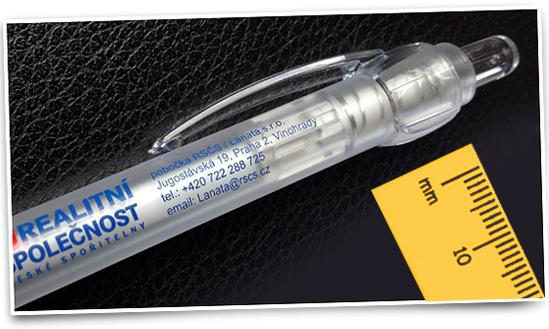
The professionals in our company have many years of experience with a wide range of printing technologies, suppliers and the pitfalls this industry brings. If you have had a bad experience elsewhere – a print that was blurry, smudged, crooked or rubbed off – don't accept it and switch to us. We print brilliantly; our benchmark is the quality standard common in Western Europe. As an example, take a look at the fine-print detail we produced for a client who decided to have his entire business card printed on a pen.

Detail of high-quality pad printing – a full business card on a pen

Printing Technologies for Promotional Products – Overview

We offer a complete portfolio of printing technologies: pad printing, screen printing, rotary screen printing, sublimation, DTF printing, UV printing, embroidery, laser engraving, embossing, ceramic firing and sandblasting. The table below gives you a quick comparison; a detailed description of each technology follows.

TechnologyMaterialsTypical productsMain advantage
Pad printingplastic, glass, metal, wood, leather, ceramicspens, lighters, keyringsprecise details, great value
Screen printingtextiles, plastic, paperT-shirts, bags, foldersrich colours, durability
Rotary screen printingcylindrical productspens, mugs, glassesprint around the full circumference
Sublimationpolyester, mugs with special coatingmugs, mouse pads, lanyardsphoto quality, unlimited colours
DTF printingcotton, polyester, blendsT-shirts, hoodies, bagsfull-colour print even for small runs
UV printingplastic, metal, glass, wood, leatherpower banks, USB drives, bottlesfull colour directly on the product
Embroiderytextilespolo shirts, caps, towelsprestigious look, highest durability
Laser engravingmetal, wood, plasticmetal pens, thermo mugs, knivesindestructible marking
Embossingleather, leatherette, paperwallets, diaries, boxesluxurious embossed relief
Ceramic firingglass, ceramicsmugs, glasses, platesthe only dishwasher-safe technology
Sandblastingglass, metalglasses, trophies, plaqueselegant permanent relief

Pad Printing

plasticglassmetalwoodleatherceramics

Pad printing is the most widespread and most versatile technology for printing on small promotional items. The principle is simple: the logo is first etched into a printing plate (cliché), the plate is filled with ink, and a flexible silicone pad transfers the ink onto the product. Thanks to the flexibility of the pad, even curved, convex and otherwise uneven surfaces can be printed with excellent quality – surfaces other technologies simply cannot handle.

Pad printing is ideal for smaller items such as ballpoint pens, bottle openers, lighters, keyrings, USB flash drives, pendants and stress balls. Printing can be done in one or more colours – each colour is applied with a separate pad in precise registration. We mix inks according to the Pantone colour guide, so your logo will match your corporate identity manual.

The great advantage of pad printing is its high precision of detail and attractive price even for smaller quantities – setup costs are low, so it pays off from just a few dozen pieces. Pad printing is where the quality of workmanship shows the most: with us, fine print and thin lines stay perfectly sharp, as demonstrated by the business card printed on a pen shown above.

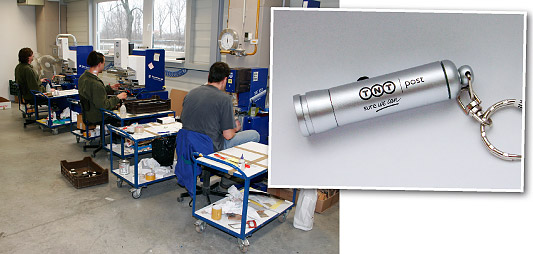
Pad printing on promotional products – printed pens

Screen Printing

textilesplasticpaper

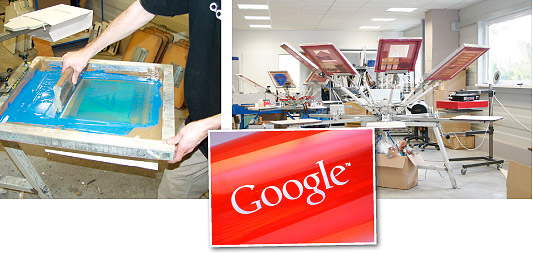
Screen printing is one of the oldest and most proven printing techniques of all. The logo is transferred onto the product by pushing ink through a fine mesh screen with a stencil (hence the name) using a squeegee. Each colour of the design is printed with a separate stencil, which makes screen printing most cost-effective for designs with a smaller number of rich, solid colours.

We most often use screen printing for textile printing – T-shirts, bags, workwear and hoodies – but it is also suitable for flat surfaces made of plastic or paper. We use both manual screen printing machines and semi-automatic presses, which significantly increase print quality and production speed and guarantee identical results from the first to the last piece of the run.

Screen printing creates a thick and extremely durable layer of ink that withstands washing and everyday wear. The colours are rich and opaque even on dark backgrounds. It is most economical for medium and larger runs, where the stencil production costs are spread out and the price per piece drops significantly.

Screen printing – printing on textiles and promotional products

Rotary Screen Printing

cylindrical productsglassplastic

Rotary screen printing is a variant of screen printing developed specifically for printing on cylindrical and conical products. During printing, the product rotates around its axis in sync with the movement of the stencil, allowing a large area to be printed around the entire circumference of the product – something flat printing simply cannot do.

We most often use it for printing on ballpoint pens, mugs, glasses, bottles, ashtrays and thermo mugs. The result is a rich, precise print with excellent coverage even on large areas, at a very reasonable price.

Please note: rotary screen printing is not suitable for mugs and glasses washed in a dishwasher. For this purpose we recommend ceramic firing, where the colour is permanently fused into the glaze.

Sublimation Printing

polyestersublimation-coated mugsphoto quality

Sublimation enables full-colour printing in photographic quality. The design is digitally printed with special sublimation inks onto transfer paper and then transferred onto the product under high temperature and pressure. When heated, the ink turns into gas (sublimates) and penetrates directly into the surface structure of the material. The colour does not sit on the surface – it becomes part of the product itself, which is why it does not rub off, crack or peel.

Sublimation is ideal for sublimation-coated mugs, white or light-coloured textiles with a high polyester content, mouse pads, lanyards, cushions and jigsaw puzzles. It allows printing of photographs, smooth colour gradients and all-over designs with no limit on the number of colours.

Because it is printed digitally without stencils, sublimation is cost-effective even for small runs starting from a single piece – perfect for personalised gifts where each piece carries a different name or photo.

Tip: sublimation-printed mugs are dishwasher safe – together with ceramic firing, it is the most durable solution for printed mugs.

DTF Printing (Digital Transfer)

cottonpolyesterlight and dark textiles

DTF (Direct to Film) is the most modern digital textile printing technology. The design is printed in full colour onto a special film, including a white base layer, coated with hot-melt adhesive powder and then heat-pressed onto the textile. Unlike sublimation, DTF works on cotton, polyester and blended fabrics, on both light and dark textiles.

DTF printing excels in vivid colours, photographic detail and high elasticity – the design stretches with the fabric and does not crack even after repeated washing. It handles fine lines, small lettering and complex multi-colour designs that would be expensive or impossible to achieve with screen printing.

Because it is printed digitally with no need to produce stencils, DTF is particularly cost-effective for small and medium runs and multi-colour logos – typically T-shirts, hoodies, bags or workwear in dozens of pieces, where classic screen printing would be unnecessarily expensive.

UV Printing

plasticmetalglasswoodleather

UV printing is a digital technology in which the print head applies special inks directly onto the product, where they are instantly cured by UV light. The result is a full-colour, high-resolution print directly on the product – with no stencils and no limit on the number of colours. The print can also include a white base layer, which keeps colours vivid even on dark and transparent materials.

It can print on plastic, metal, glass, wood and leather. UV printing is ideal for power banks, USB flash drives, bottles, thermo mugs, notebooks, boxes and corporate gifts, even in small quantities – again starting from just a few pieces.

An interesting option is 3D varnish – layered printing with a tangible raised texture that gives your logo a premium, embossed look. Cured UV print is resistant to abrasion, moisture and UV light, so the colours stay vibrant for a long time.

Embroidery

textilespremium look

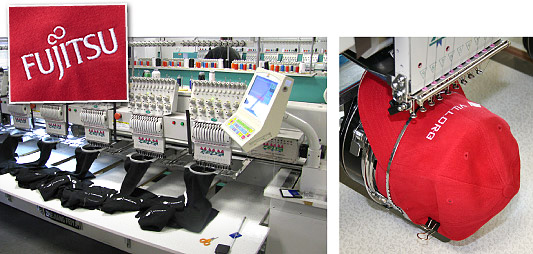
Embroidery is the most prestigious and most durable way to brand textiles. Logos can be embroidered on almost any textile product – towels, bath towels, bags, caps, T-shirts, polo shirts, hoodies, jackets, blankets and bathrobes. Before embroidering, your logo is converted into a machine embroidery program that translates the artwork into needle paths and individual thread colours.

The product is then clamped into a special embroidery hoop and a modern embroidery machine takes care of the stitching itself. The finishing – trimming connecting threads and backing material – is done by hand, guaranteeing a clean and precise result. We select threads from a wide colour chart so the embroidery matches your logo as closely as possible.

An embroidered logo gives garments a luxurious and professional look; it does not fade or rub off and easily withstands frequent washing and industrial laundering. That is why embroidery is the first choice for corporate clothing, workwear and representative textile gifts.

Logo embroidery on textiles – corporate clothing

Laser Engraving

metalwoodplasticindestructible

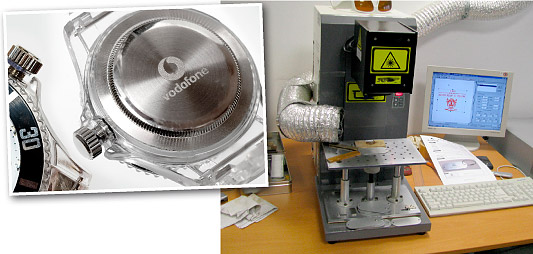
Laser engraving uses a precisely guided laser beam to mark metal, metal-coated, wooden and plastic products with a coloured surface finish. The beam vaporises the top layer of the material, and the resulting logo takes on the colour of the underlying material – typically silver on anodised aluminium, dark grey on stainless steel, and a naturally darker shade on wood. The elegant tone-on-tone effect looks subtle and premium.

Engraving is practically indestructible – the logo is burned directly into the material and cannot be rubbed, scratched or washed off. This makes it ideal for items in daily use: metal pens, multitools, knives, thermo flasks, stainless steel bottles, keyrings, lighters and wooden gifts.

The laser can also handle very fine details, small lettering and personalisation – each piece of the run can carry a different name. That is why engraving is a popular choice for executive and VIP gifts, where flawless execution and long life are expected.

Laser engraving – metal pens and promotional products

Embossing (Blind Embossing)

leatherleatherettepaper

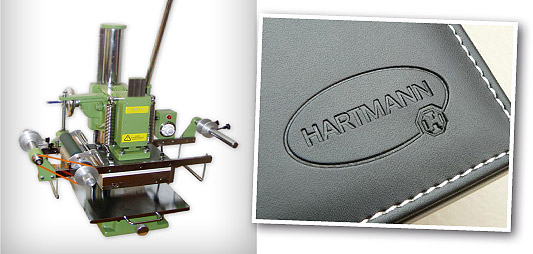
Embossing is a premium technology for materials such as leather, leatherette and paper. A heated brass die with your logo is pressed into the material under high pressure, creating an elegant three-dimensional relief. We most often use it to brand leather and leatherette wallets, keyrings, briefcases, diaries, business card holders and paper gift boxes.

The most expensive item is the production of the brass die. However, once paid for, the die becomes the property of the customer and, thanks to its almost unlimited lifespan, it can be reused at any time – repeat orders are therefore significantly cheaper, as you only pay for the embossing itself.

Blind embossing (without colour) looks timeless and luxurious. For a more striking effect, embossing can be combined with gold or silver foil (hot foil stamping), giving your logo a metallic sheen – ideal for premium gifts and representative items.

Logo embossed into leather – blind embossing

Ceramic Firing

glassceramicsdishwasher safe

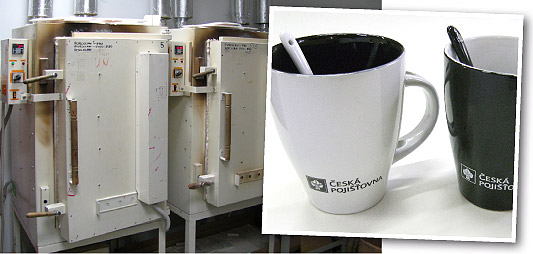
Ceramic firing is the most durable technology for marking glass and ceramics – mugs, glasses, teapots and plates. It is a technologically demanding, multi-step process: the logo is first screen-printed with special ceramic inks onto transfer paper. After soaking, the printed design is slid off the transfer paper and placed by hand onto the product.

Once perfectly dried, the product is fired in a kiln at high temperature. During firing, the colour fuses permanently into the glaze of the product and becomes an integral part of it.

Tip: precisely because the colour is fused into the glaze, ceramic firing is the technology we recommend for mugs and glasses washed in a dishwasher. The print withstands repeated washing, high temperatures and mechanical wear for the entire lifetime of the product.

Ceramic firing – durable, dishwasher-safe printing on mugs and glass

Sandblasting

glassmetalpermanent relief

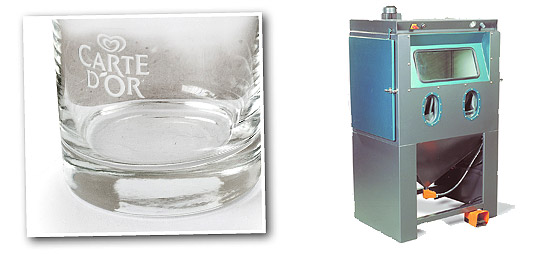
Sandblasting is an exclusive technology for marking glass and metal. The design is created by blasting very fine sand under pressure through a special stencil – where the sand hits, the surface is finely roughened, creating a matte design with a permanent relief that you can not only see but also feel under your fingers.

Sandblasting is suitable for glasses, goblets, carafes, plaques, awards, stainless steel bottles, mugs and other glass or metal products. A matte design on shiny glass looks very elegant and timeless, which is why sandblasting is a popular choice for gift glassware, corporate awards and premium gifts.

A sandblasted logo is absolutely permanent – it is created directly in the material, so it cannot be washed or rubbed off and easily withstands the dishwasher and everyday use.

Glass sandblasting – permanent marking of glasses and goblets

Not sure which printing technology to choose?

Talk to us – we will recommend the right technology based on the material of the product, the number of colours in your logo, the size of the run and how the product will be used. Send us your inquiry together with your logo and we will prepare a tailored quotation.